A Decade of Consumer Awareness: Slavery Footprint in 2023

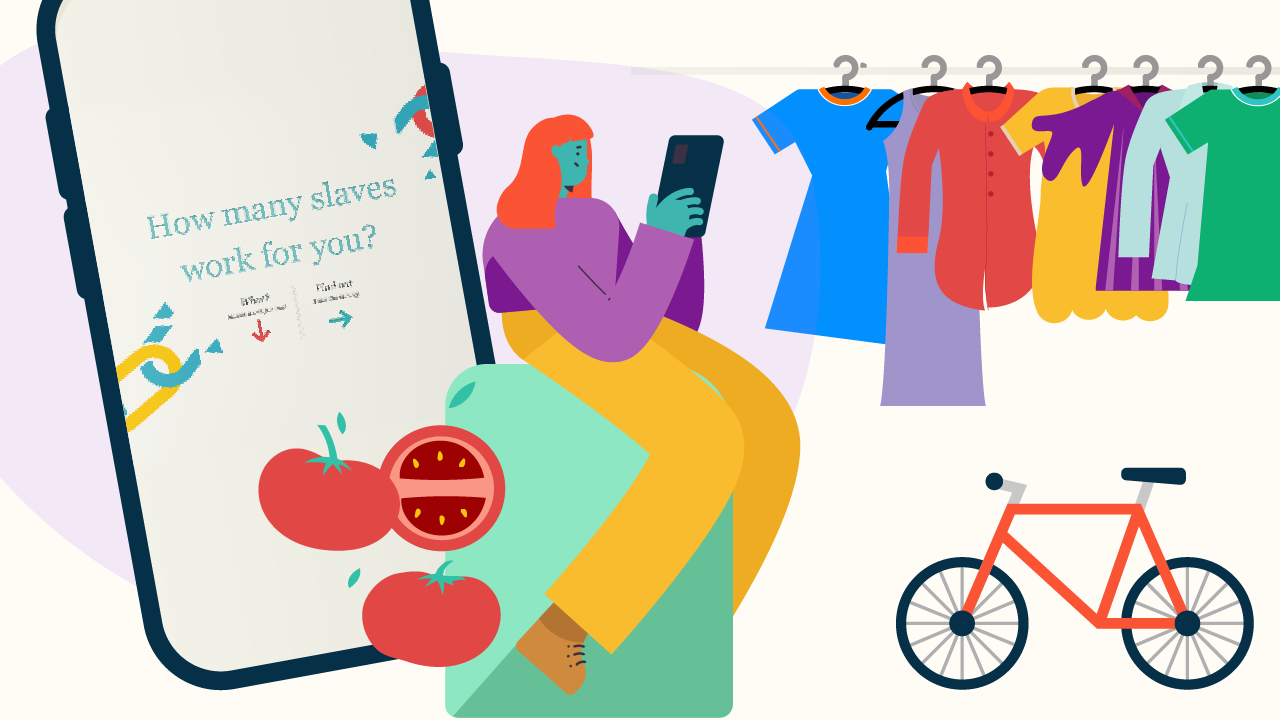
In 2011, Slavery Footprint was launched with support of the US State Department and Google with the goal of raising consumer awareness of how the products people purchase rely on slave labor — because the people who produce them are forced to work without pay, under threat of violence, or through other forms of coercion. The founders hoped that 150,000 people would come to know their slavery footprint. Instead, over 32 million consumers and counting have connected emotionally and empirically to the fact that their consumption indirectly connects to forced and child labor around the world today. With over a decade of data now under its belt, Slavery Footprint now offers visitors a dynamic map displaying consumer demand data spanning a decade and nearly every country in the world. Consumers shared billions of products worth trillions of dollars on the platform. They did not know it, but their collective consumption power became a form of activism. Following the statistics on the map, one can see that the world is not the same as it was a decade ago — while consumers became aware over time, laws were passed, businesses stepped up, and progress was made. Slavery Footprint is now embedded into school curriculum globally, inside museums, and has been used to build the political will to pass laws designed to end slavery in supply chains. Their collective consumer voice has been seen and heard by political and business leaders who all want the same thing: freedom. This technological activism in the form of consumer awareness led to laws getting passed around the world requiring companies to monitor their supply chains for forced labor.

TRUSTED BY FORTUNE 500 COMPANIES

Technology as Activism: A Legacy From the Printing Press to the Internet

Every major human rights movement has wielded the most powerful technology of its era — from the printing press to television to big data — to expose injustice and unite a cause.

This form of technological activism is not new. Many of the great human rights movements used the technology of their day to expose injustice and unite a movement. Everyday citizens throughout history have connected through the newest technology to raise awareness, build critical mass, and bend the arc of the moral universe toward justice. The abolition movement was gaining momentum in Great Britain around 1783, at the same time that the printing press was becoming the mass means of communication. Images could now be printed in newspapers, pamphlets, and books, and the abolitionists understood they could use these mediums to reach a wider audience and educate people about the evils of slavery. In 1789, William Wilberforce's pamphlet was published — a detailed and eloquent condemnation of the slave trade that argued it was immoral, unchristian, and a violation of human rights. His writing was widely read and helped to galvanize support for the abolitionist cause. The abolition of slavery in the United States involved a wide range of individuals and groups. One of the most effective tools in the abolitionist's arsenal was the newly invented telegraph, which was instrumental in spreading information and rallying support for the cause of abolition. Abolitionist newspapers, such as William Lloyd Garrison's The Liberator, used the telegraph to quickly disseminate their stories and editorials to other newspapers around the country. The Selma to Montgomery marches were a series of civil rights protests that took place in 1965 in Alabama, USA, led by civil rights leaders such as Martin Luther King Jr., John Lewis, and James Bevel. These leaders understood the power of television to reach a wide audience and raise awareness about their cause. With 92% of American households owning a television, the civil rights leaders worked closely with television networks to ensure the events of the marches were captured on camera and broadcast across the nation. The widespread coverage brought the issue of voting rights to the forefront of American politics and led to the passage of the Voting Rights Act of 1965, which banned discriminatory voting practices and ensured that African Americans had the right to vote.

From Consumer Movement to Business Software: The Birth of FRDM


Consumer awareness built the political will for change — but businesses needed tools to act on it, and that gap gave rise to FRDM.

The team behind Slavery Footprint followed the playbook of these incredible historical movements by using the technology of their day: big data and the Internet. After witnessing the power of consumer activism firsthand, in 2016 the founder began meeting with business leaders to understand what they needed to meet this consumer demand. Most had zero tools to map their supply chains. That is when FRDM — pronounced "freedom" — was born. FRDM is a business software company helping some of the biggest companies in the world use their supply chains to protect freedom around the world by mapping their supply chain and driving systemic change. The platform uses invoice-level spend data to map customers' supply chains so the data can reveal where to look for risk and how to fix it. Consumers inspired FRDM, and the goal now is to find new ways to work together again to build the world everyone wants to live in.

Progress Made — And the Work Still Ahead

The map of consumer awareness shows a changed world, but mapping global supply chains will take years of continued effort and collaboration.

Looking at over a decade of data on the Slavery Footprint map, it is amazing to see that while consumers became aware over time, laws were passed, businesses stepped up, awareness was spread, and real progress was made. The world today is not the same as it was when Slavery Footprint first launched. Thirty-two million consumers helped prove that awareness, at scale, is a form of power. Yet it feels, in some ways, like starting over. Mapping supply chains will take years. New global laws — including the US Uyghur Forced Labor Prevention Act, Germany's Supply Chain Due Diligence Act, and others — now require companies to go further than ever before in demonstrating that their supply chains are free from forced labor. Progress is being seen every day, and the consumer movement that inspired FRDM remains the moral foundation for all the work still ahead.

Download FRDM Explainer

Get access to the
latest supply chain resources

*not sales material disguised as 'resources.'

Thank you! Your submission has been received!
Oops! Something went wrong while submitting the form. Please try again.

See FRDM In Action

Discover how FRDM gives your team real-time visibility into supply chain risk — so you can act before issues become liabilities.